

The unique characteristics and challenges presented by wheeled cargo have spurred innovation in both ports and vessels to ensure smooth transportation. A crucial factor is the presence or absence of ramps, ferry slips, onboard cranes, or dockside cranes, which significantly impacts loading methods. Consequently, RoRo (Roll-on/Roll-off) and LoLo (Lift-on/Lift-off), two distinct loading methods, are frequently compared regarding their efficiency in handling wheeled cargo. Each method offers unique benefits and drawbacks. This article aims to delve into these aspects, assisting readers in determining the most suitable option for their needs.
RoRo and LoLo: Loading Methods and Vessels
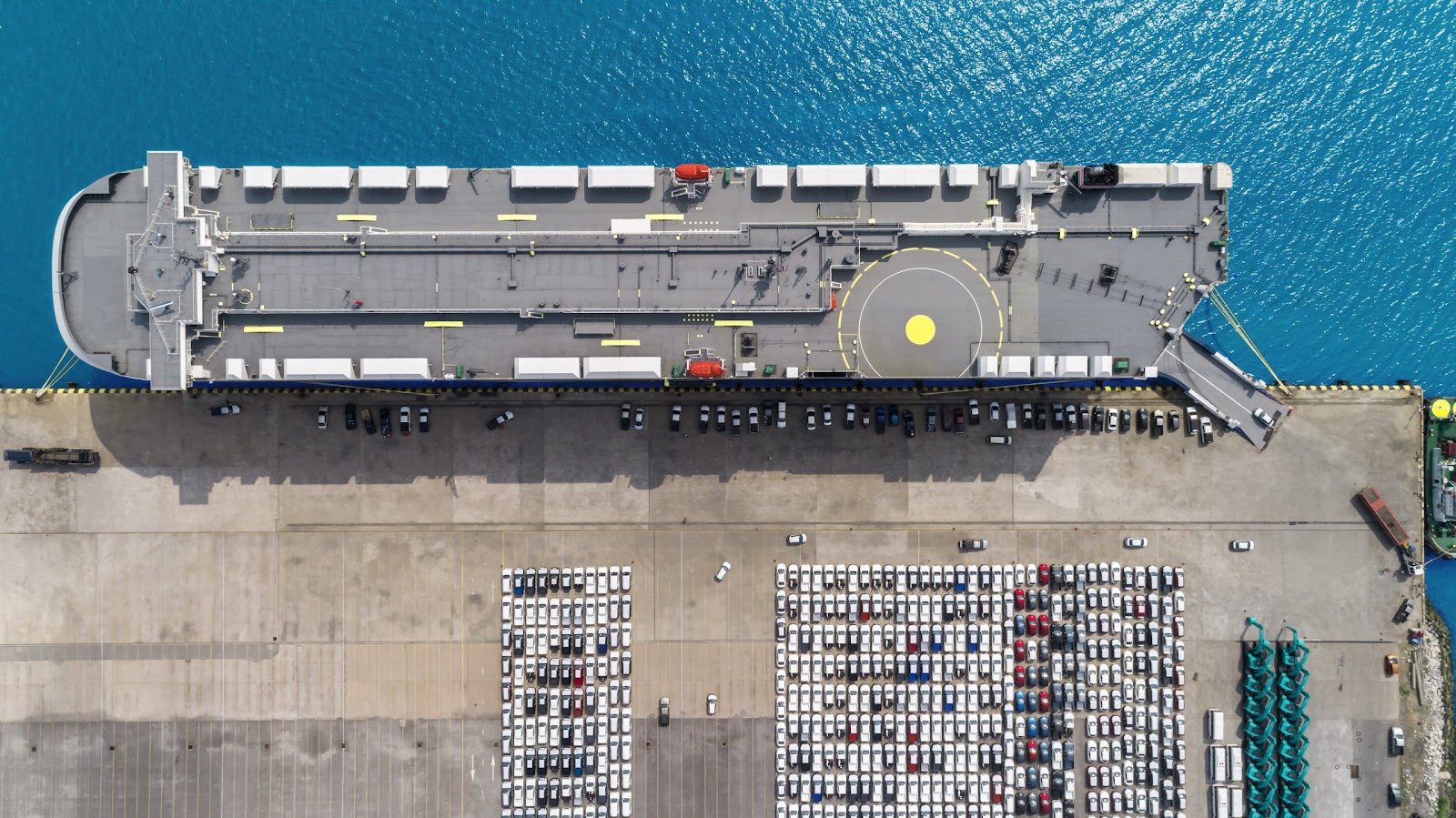
To begin with definitions, RoRo signifies Roll-on/Roll-off, while LoLo denotes Lift-on/Lift-off. As loading methods, RoRo involves workers driving cargo onto and off of ships, whereas LoLo utilizes cranes to lift cargo. A hybrid method, RoLo, also exists, where cargo is driven on and lifted off, but it is a more specialized and less common approach than either RoRo or LoLo.
It's important to note that these terms apply to both loading methods and vessel types. RoRo ships typically feature ramps or slips that enable workers to drive wheeled cargo on and off. Conversely, LoLo ships are equipped with onboard cranes or similar handling equipment, allowing them to handle cargo independently. LoLo ships are frequently referred to as geared vessels due to this self-sufficiency.
Historically, both RoRo and LoLo have been used for various types of wheeled cargo. While LoLo was the dominant method for car transportation in the early 20th century, RoRo emerged as a viable alternative thanks to advancements in carrier technology. Today, both remain viable options, each with distinct advantages and disadvantages that address global trade challenges in unique ways.
RoRo Vessels
Over the years, carrier advancements have led to the development of diverse types of RoRo vessels. By definition, RoRo vessels facilitate RoRo loading to varying degrees, catering to specific transportation requirements.
ConRo
ConRo vessels are hybrid ships, combining the characteristics of RoRo and Container ships. These vessels can handle both containerized cargo and unitized wheeled cargo, with containers stored on deck and wheeled cargo below deck. Internal ramp systems are used to keep automobiles separate from other vehicles during transport.
RoPax
RoPax (roll-on/roll-off passenger) vessels are RoRo vessels designed to transport both wheeled cargo and passengers. While "RoPax" is primarily a technical term, vessels featuring both a RoRo car deck and passenger facilities are commonly known as cruise ferries.
PCC and PCTC
PCC (Pure Car Carrier) vessels are specifically designed to carry only cars. PCTC (Pure Car and Truck Carrier) vessels, on the other hand, can transport cars, trucks, and other types of conventional four-wheeled vehicles.
RoLo
Another hybrid vessel type, RoLo (roll-on/lift-off) vessels, are equipped with vehicle ramps as well as cargo decks accessible by cranes. While they can function as RoRo vessels, they can also accommodate cargo requiring crane lifting for unloading.
LoLo Vessels
LoLo vessels, by definition, facilitate the LoLo loading method. They accommodate various types of containerized cargo in addition to unitized automobiles, as their onboard cranes enable non-RoRo cargo loading.
Geared Vessels
While numerous ship types can function as RoRo vessels, geared vessels are the primary type of LoLo vessel. Geared vessels are cargo ships equipped with onboard cranes for lifting cargo on and off the ship. Unlike container ships, they do not rely on dockside equipment.
RoRo and LoLo: Comparing the Loading Methods
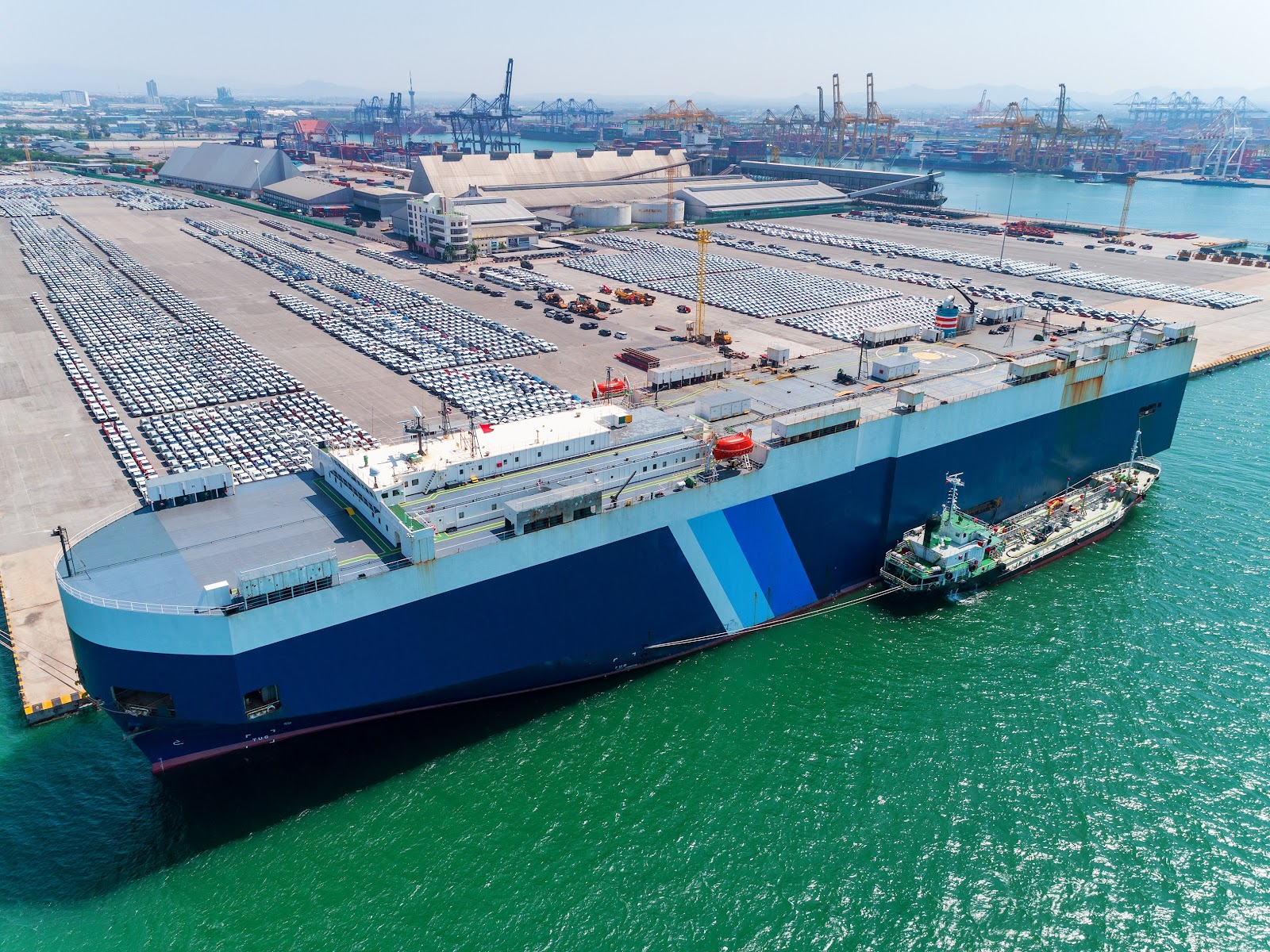
As previously mentioned, both RoRo and LoLo offer distinct advantages as loading methods. It is worth noting, however, that LoLo aligns more closely with the ecological import standards adopted by many countries and the European Commission. Nevertheless, the optimal choice between these methods typically depends on the specifics of each situation.
Cost
A key difference between RoRo and LoLo lies in their associated costs. RoRo is generally more cost-effective, involving a simpler logistics chain and lower unloading fees due to the absence of container handling fees. However, LoLo tends to be safer, potentially reducing the insurance cost gap.
On the other hand, LoLo might prove cheaper for certain shippers, albeit under specific conditions. In his comparative study of Ro-Ro & LoLo operating systems, Julio Martínez Alarcón argued that LoLo “is generally a less expensive system.” He clarified, however, that this advantage is contingent on a logistics chain that incorporates rail transport “and concerns high-volume cargo.” Furthermore, he noted that “[t]he LoLo system also offers a higher load capacity,” which could make it more cost-appealing for mixed cargo shipments.
Safety
Concerning safety, LoLo is typically the safer option. Wheeled cargo has less protection under RoRo, as it must remain unlocked and be driven onto and off of the vessel. This requirement increases the risk of accidents and damage, while LoLo minimizes these risks. Additionally, unitized wheeled cargo is exposed to the elements on RoRo vessels' decks, unlike LoLo, where containers offer protection.
While both RoRo and LoLo are generally safe loading methods, and some contend that the safety risks are minimal, the consensus is that LoLo provides a comparatively safer approach.
Convenience
Regarding convenience, RoRo holds a clear advantage. Driving wheeled cargo onto and off of a vessel is considerably faster than using cranes. This makes RoRo undeniably quicker, which is particularly appealing for high value-added products. Consequently, wheeled cargo or products can reach their final destination much faster using RoRo compared to LoLo.
Port Availability and Constraints
LoLo possesses a circumstantial advantage in terms of port availability. Most ports, regardless of size or location, have the necessary equipment to handle LoLo shipments. Conversely, some smaller ports and countries restrict RoRo shipments for various reasons.
Eco-Friendliness
Finally, LoLo is undeniably more eco-friendly, as RoRo inherently involves higher CO2 emissions. Therefore, LoLo is more future-proof in terms of green regulations and shipping guidelines. Due to its inherently greener nature, LoLo may become a more competitively viable option than RoRo in the years to come.