
Containerized Car Delivery: A Comprehensive Guide

Before venturing into the business of international car delivery, ensure your chosen carrier possesses ample experience in handling orders safely and reliably. This includes expertise within the countries where you source vehicles and their subsequent transport via air or sea.
When entrusting someone with your car's shipment, you need assurance that it will be handled with utmost professionalism, complemented by superior after-service support.
By the way, if you're trying to determine how many Volkswagen Jettas fit into a container—perhaps seeking a cost-effective delivery method or a turnkey solution—reach out to [email protected]. Regardless of the vehicle type—cars, motorcycles, off-roaders, boats, or heavy machinery—Model Cargo, we are committed to achieving your complete satisfaction. They won't stop until they get there.
Choosing the Right Container
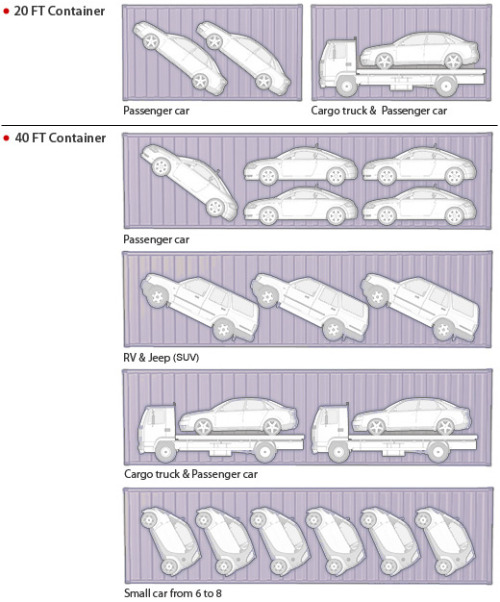
From 2016 to 2019, a frequently asked question was, "How many Nissan Leafs can a container hold?" For this and other models, you can ship your car in either a 20-foot or 40-foot container, depending on the specifics of your delivery. According to assignment help services, a standard 20-foot container typically accommodates one or two cars or SUVs, while a 40-foot container can economically house two to four mid-size vehicles. A 45-foot container can comfortably fit up to five cars. While technically you could squeeze in six, securing insurance might become problematic.
Opting for international car delivery in containers opens the door to using the Less than Container Load (LCL) approach, where a single container holds cars belonging to different owners.
For further details on this topic, contact us at [email protected], or leverage the Load Calculator app to maximize cargo space efficiency.
Enterprises and individuals often ponder: "How many Ford Fusions can be loaded into a shipping container?" This is a common concern because logistics companies prioritize minimizing unit transportation costs. The more vehicles packed into a container, the lower the per-car shipping expense.
Compared to Roll-on/Roll-off (RoRo) shipping, container loads for cars don't always offer the same advantages. Determining how many Honda Accords fit in a container hinges on the container's size and the carrier's capabilities. If each container can only accommodate one or two vehicles, shipping costs will be substantial. Weighing the potential damage risks associated with alternative transport methods is essential, although RoRo delivery offers cost savings.
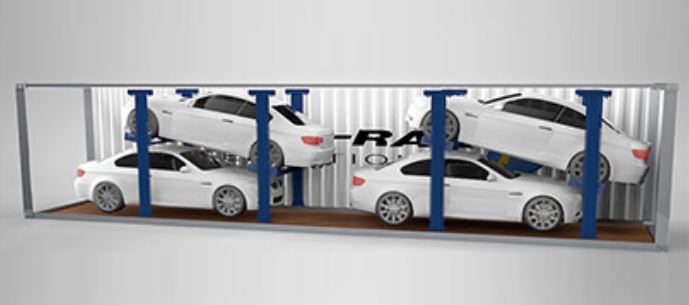
Perhaps you've already wondered how many Volkswagen Passats can be stuffed into a container. Typically, these sedans, fitting within standard passenger car dimensions, can be arranged in quantities of four using specialized internal racks. Consult the Load Calculator for guidance (or contact [email protected] for customized car placement solutions). For freight cost estimates and related expenses, utilize the quote form for instant online quotes.
Advantages of Containerized Vehicle Delivery
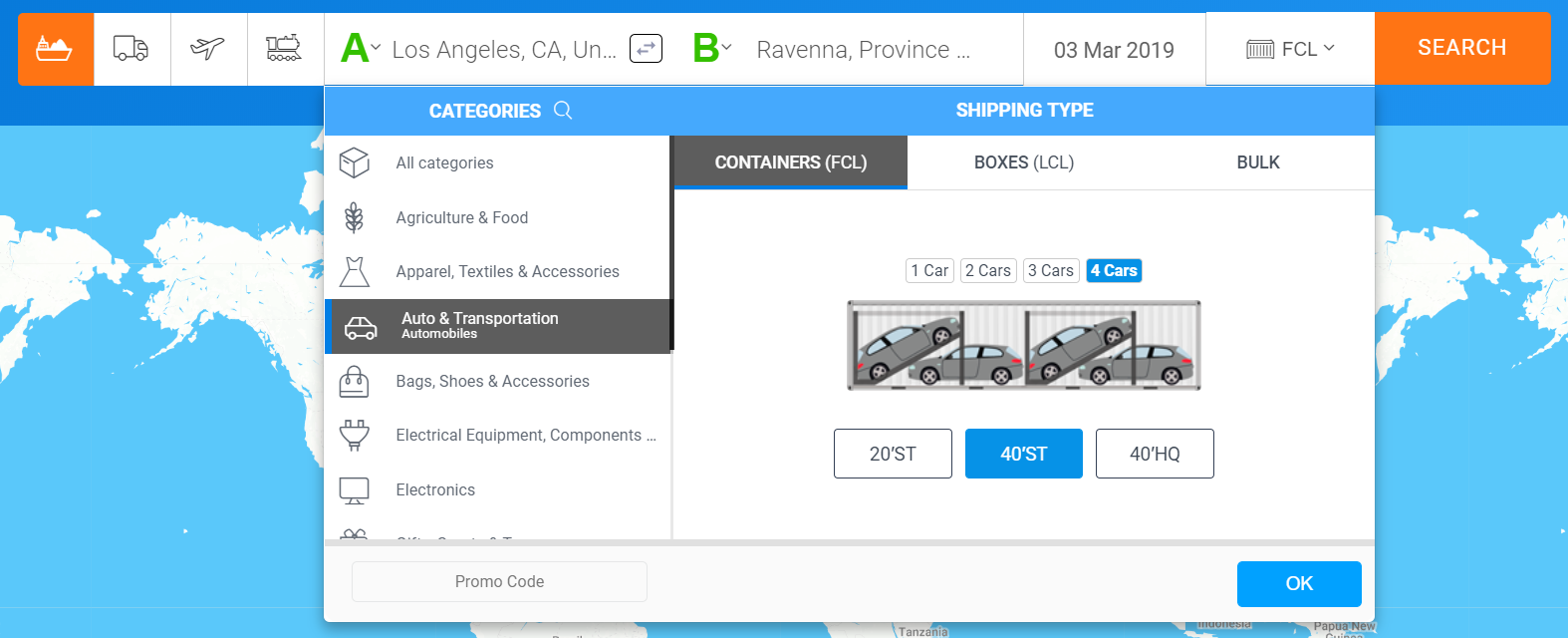
High-strength steel folding racking systems (or even wood) ensure vehicles can be safely and effectively transported in containers to any global destination. To answer how many Honda CR-Vs fit in a container, know that up to four units can be precisely arranged in a 40-foot container using these racks. While these single-use designs incur an additional cost of $500-$900 on top of freight, the impact is minimal when divided among four vehicles. Once secured, the car remains untouched until it reaches its final destination. The container seamlessly transitions from rail to warehouse, warehouse to truck, and truck to ship, eliminating the need for intermediate handling and reducing accident risks.
Delivering Uniform Car Models
So, how many Toyota Camrys can you squeeze into a single container?
The answer hinges on the size of the vehicles. The following is an approximate guide, assuming your shipment consists of identical cars loaded into a standard 40’ HC container:
- 5-6 small cars, such as Fiat 500s, Smarts, or Tata Nanos.
- 4-5 mid-class cars, for example, Honda Civics, Skoda Octavias, or Volkswagen Golf Hatchbacks.
- 4 large cars, such as Hyundai i40s, Ford Mondeos, BMW 5 Series, or Mazda 6 Tourer Estates.
- 3 pickups/SUVs, for example, Range Rover Sports, Nissan Qashqais, Volvo XC90s, or BMW X5s.
The ability to transport this many cars makes container shipping a compelling alternative to RoRo, potentially reducing the number of containers required when using racks. This is good news for businesses needing to transport numerous vehicles, for whom container transport was previously inaccessible.
Mixed Model Delivery
If using a racking system to transport three Range Rover Evoques in a shipping container, you'll likely find extra space for a smaller car. This showcases the true effectiveness of vehicle racks, enabling you to transport various vehicle types in one container. For example, you might combine six Range Rovers and two Ford Fiestas in two containers, whereas the same set would need four containers without racks. You can apply this principle to determine how many BMW X6s, RAM Pickups, or Mitsubishi Outlanders fit in a container. This saves money and creates efficient vehicle transport opportunities.
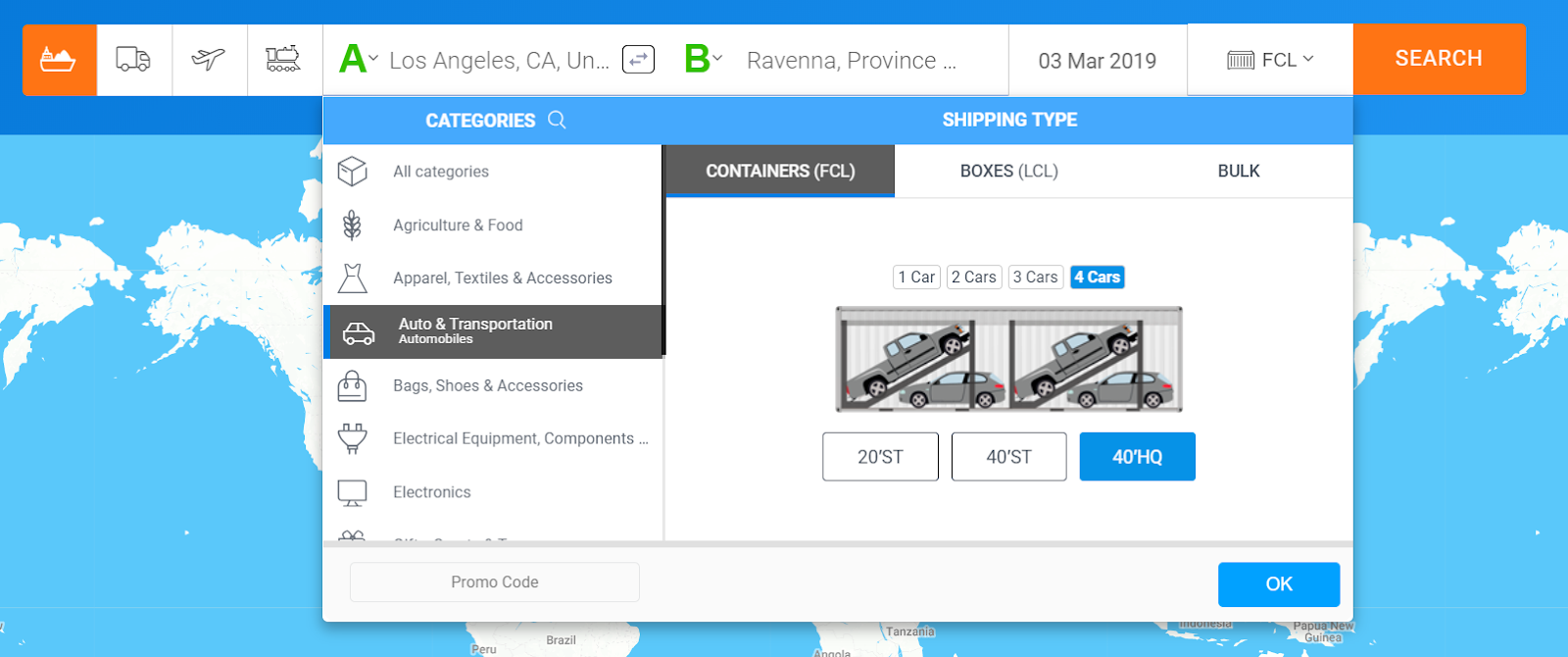
One of the primary services offered is customized load planning to maximize the number of vehicles loaded into a container while minimizing the number of containers needed. Send your list of vehicles to [email protected] for a cost-effective solution, irrespective of the origin and destination countries. Explore the Load Calculator and discover how many Audi A6s fit into a container. Think of it as playing Tetris with cars, but it yields excellent results.
The outcome is economical shipping without the risks of bumps, scratches, and theft associated with RoRo delivery.
Container Shipping: Savings or a Setback?
The container industry traces back to 1956, an era when automotive manufacturing largely coincided with transportation needs. In America, you'd find Chevrolets, Oldsmobiles, and Buicks; in Europe, DeHavilland Comets, Audis, and Citroens. A ferry ride to England revealed Minis and Land Rovers. People predominantly purchased domestic cars. The notion of shipping numerous cars across the ocean seemed illogical, making the question of how many Toyota RAV4s fit in a container even more absurd.
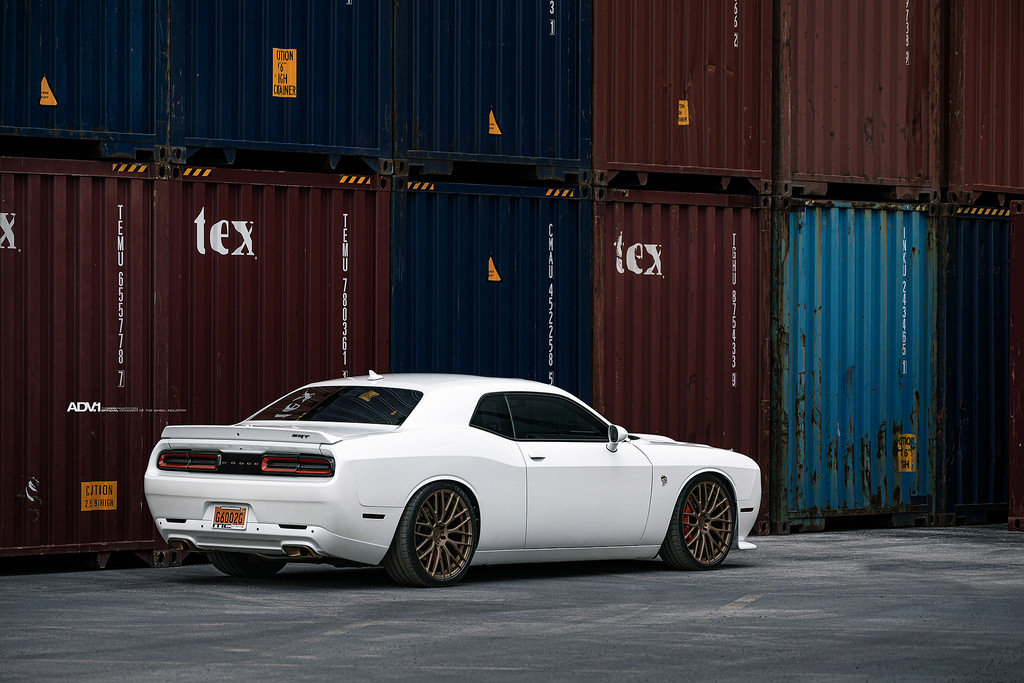
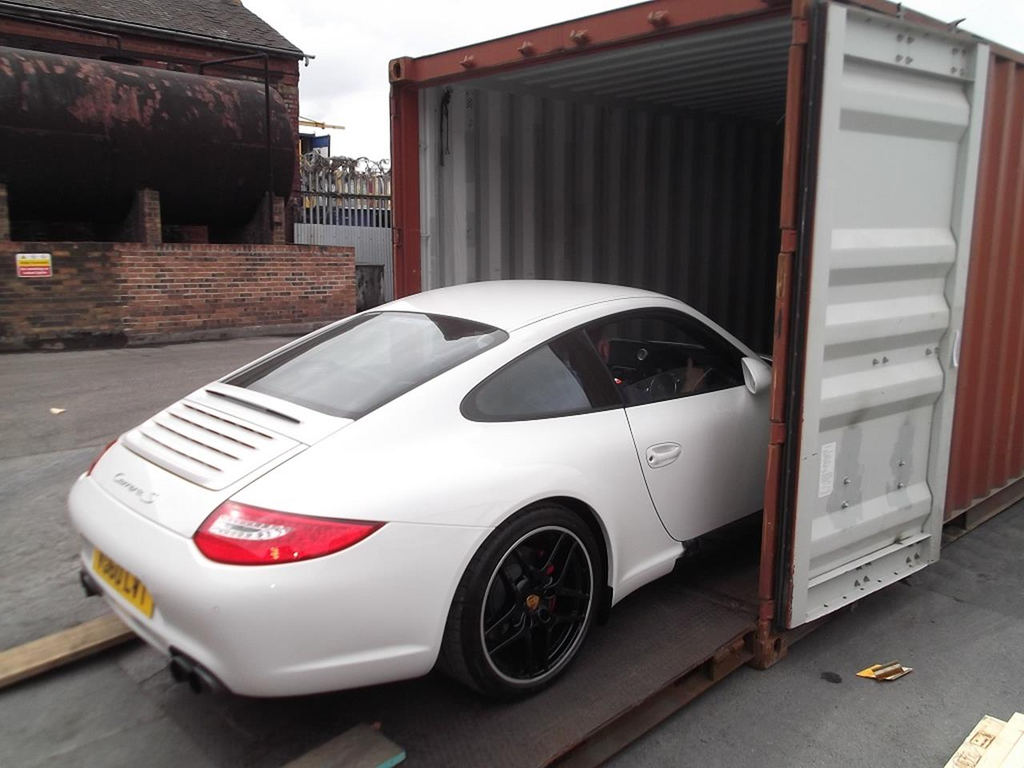
Thus, containers and cars remained disconnected for a long time; their industries evolved separately. Without specialized research, the maximum number of Toyota Corollas fitting into a standard 40-foot container was typically two, rendering it impractical and uneconomical.
Transporting just two cars hardly justified the container's potential. Consequently, RoRo delivery became the norm. This Victorian-era invention was revolutionized by the Japanese in the 1960s for transport among their nearly 7,000 islands. Later, this idea expanded globally. Since then, little has changed.
RoRo delivery's widespread acceptance has stifled innovation in container shipping. RoRo's drawbacks—including high damage rates, multiple handling points, environmental exposure, and lengthy transit times—were grudgingly accepted as inherent to car transportation. Few questioned whether RoRo was the only option or whether multimodal containers offered a more practical solution. While discussions continue, by 2019, the question of how many Honda Civics fit in a container is primarily posed by private buyers and small business owners purchasing cars for personal use or small-scale resale.
Evolving Innovation
One reason for this enduring perception is that early innovations were lackluster. Initial attempts at container frames involved wood, which was fragile, prone to breakage, and generally single-use. While wooden shelves are still used, when considering how many Chevrolet Silverados or Chevrolet Equinoxes fit in a container, their presence shouldn't be a factor. Only in the new millennium did reinforced, reusable steel frames emerge. This instantly doubled the capacity to four cars per container, giving us a clear idea of how many Lexus IS models fit in one shipping container. For small cars in a 45-foot container, this increases to six.
Innovations like R-Rak are based on two key principles:
First, containers offer the safest, fastest, and most cost-effective means of transporting goods from A to B. This isn't marketing hype; it's simply a fact.
Second, maximizing container space is crucial: combine cars of different shapes and sizes (as demonstrated by a recent combination of a Jaguar XJ, XF, and two Range Rover Evoques into one 45-foot container). Previously, each of these cars would have occupied its own container. Now, we offer a safe, reliable, economical, and convenient option.
Seeking similar insights to determine how many Nissan Rogues fit in a container? Email us at [email protected]!

Reconsidering Assumptions
For years, the assumption that containers could only carry two cars was widely accepted. However, this limitation stemmed from a lack of innovation. Containers inherently possess the capacity for cars of various sizes; it's merely a matter of optimizing internal space utilization. To discuss your delivery needs and explore potential savings, send your inquiry to [email protected].
Join our open group for discussions on international transport activities and our Telegram channel for shipping innovations and industry updates!